
Healthy lifestyle hub — built beside supplement use
Everyday Habits That Support Men's Health
Supplements are the small part of the picture. This hub collects the everyday habits that do most of the work for adult men: sleep, movement, food, and a few routines that are easy to overlook. Nothing here is complicated, and none of it requires a gym membership or a special diet.
Four habits carry most of the load — sleep, movement, food, less of what drains you.
Start with one, keep it steady, then add the next.
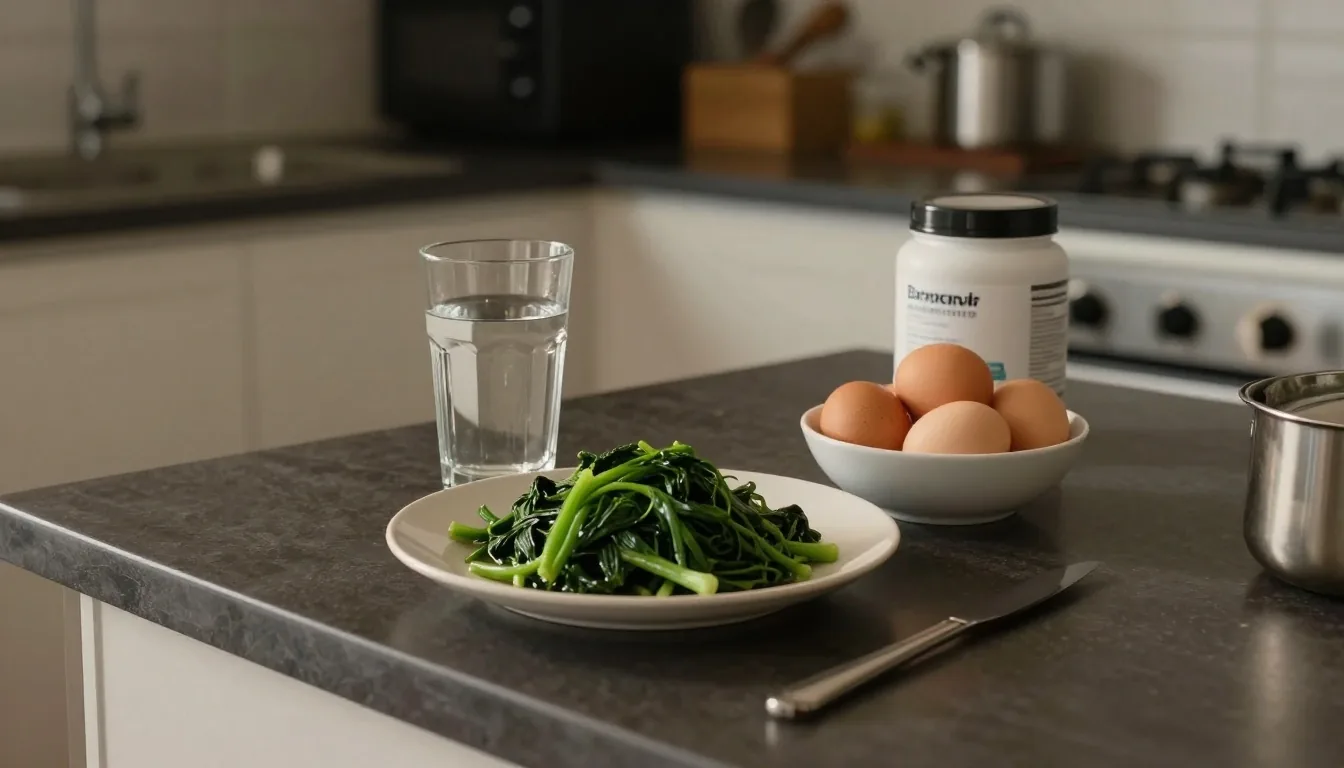
The order below matters more than the volume. Sleep first, movement second, food third, then the things worth cutting back.
What the four pillars cover
Habits decide most of it. Supplements fill the rest.
Before you compare natural supplements for men or add vitamins and minerals for men to a routine, it helps to know what the routine is already doing. The three columns below are the shortest honest summary we can write of where men's health support actually comes from.
Sleep
A wake time you actually keep sets the body clock harder than a bedtime you aim for. Seven to nine hours is the range most adult men are working toward.
Movement
Walking breaks, stairs, and standing up every hour add up across a week. Two or three cardio sessions plus two short strength sessions is a solid base.
Food and hydration
Protein at each main meal, vegetables at two of them, water through the day. In a hot climate, plain water covers most hydration needs.
Habit one
Sleep on a fixed schedule
The single most useful habit is going to bed and waking at roughly the same time, including weekends. A steady wake time sets your body clock more reliably than a steady bedtime. Aim for seven to nine hours, and treat the last hour before bed as wind-down time. If you snore heavily or wake unrefreshed, that is worth mentioning to a doctor rather than solving with a supplement.
Weekends are where the schedule usually breaks. Keeping the wake time within an hour of the weekday one on Saturday and Sunday does more for how Monday feels than an extra two hours of sleep does.
What a steady night looks like
- Wake time first. Pick it, then work backwards to a bedtime you can keep most nights.
- Wind-down hour. Dim light, no heavy meal, no caffeine. Phone face down if you can manage it.
- Cool and dark room. Bandung nights are mild — a fan and closed curtains are usually enough.
- Two-week test. Hold the same wake time for fourteen days before deciding it does not work.

Habit two
Move more during ordinary days
You do not need a training plan to benefit from movement. Walking during breaks, taking stairs, and standing up every hour all add up across a week. If you want structure, two or three sessions of moderate cardio plus two short strength sessions is a solid base for most men. Start below what you think you can handle, then increase slowly. Consistency beats intensity for people with full schedules.
The men who keep this up usually tie it to something they already do — the walk to lunch, the stairs to the office, a standing desk block. Tying movement to an existing part of the day beats finding a new hour for it.
Habit three
Build meals around protein and vegetables
A simple plate rule helps: protein and vegetables first, starch alongside. Protein at breakfast, in particular, keeps hunger steadier through the morning than a sweet drink or white rice alone.
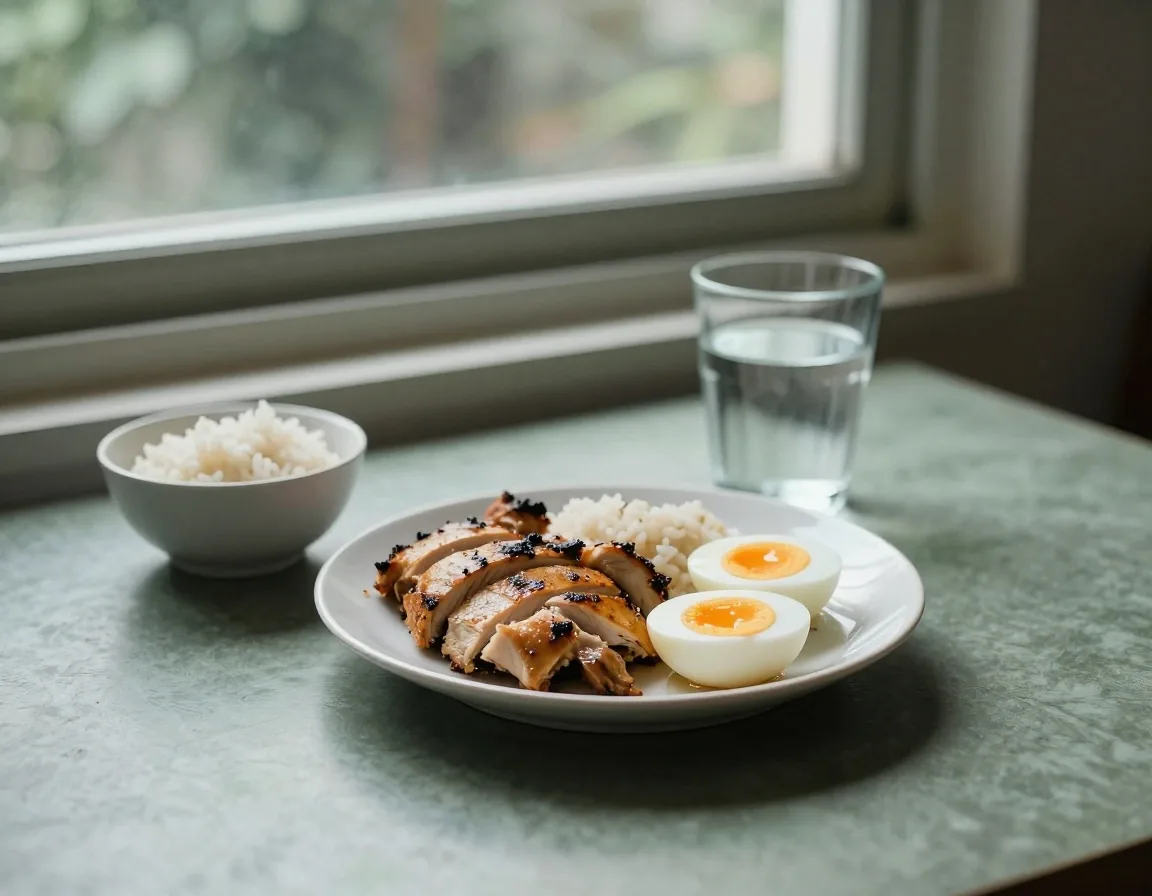
Protein at breakfast
Eggs, tempeh, or yesterday's chicken with rice
Building the morning meal around a protein source rather than a sweet drink tends to hold appetite steady until lunch. You do not need to count grams — aim for a source at each main meal.

Vegetables at two meals
Kangkung, cucumber, long beans — whatever is at the market
Two of the three main meals carrying vegetables is a fair target for most men. Local greens are cheap and quick to cook; you do not need imported produce to meet the goal.

Water through the day
Coffee and tea count, but plain water should carry most of it
In a hot climate, hydration is easy to under-do without noticing. Keeping a bottle where you actually sit is more reliable than remembering to drink at set times.
One honest note on portions
None of this asks you to weigh rice or cut out nasi goreng for good. The plate rule is a default, not a rule you break the evening if you cook something else. Where most men see a difference is in the number of meals built this way per week, not in any single meal being perfect.
Habit four
Cut back on what drains you
Alcohol, late caffeine, and long stretches of sitting all take a toll that shows up as low energy. You do not have to quit anything entirely — pick one to reduce rather than trying to fix everything at once.
- Late caffeine Moving the last coffee to before mid-afternoon is enough for most men to notice an easier wind-down within a couple of weeks.
- Alcohol Keeping it to occasional use tends to show up in sleep quality and next-morning energy before it shows up anywhere else.
- Long sitting blocks Standing up every hour is the practical version. The movement does not need to be a full walk to count.
- Sugary drinks as a default Swapping one daily sweet drink for water or unsweetened tea is often the single change men report feeling fastest.
Pick one row and hold it for two weeks. Trying to strip all four at once rarely survives a busy month, and a partial change that sticks beats a full reset that does not.
Habit five
Stress and recovery
Chronic stress affects sleep, appetite, and how you feel day to day. Short, regular breaks work better than one long rest at the end of a hard month.
Breathing exercises, a walk without your phone, and time with people you like are all legitimate recovery tools. None of them are dramatic, and that is the point. They work because they are repeatable — a five-minute version you actually do beats a weekend retreat you do once.
If stress is carrying into sleep, appetite, or mood most days for weeks, it is worth speaking to a qualified professional. Supplements and habit changes support a routine — they are not a substitute for that conversation.
"Short and repeatable beats long and rare. Recovery is a habit, not a holiday."
The note we come back to when the week gets away from us
Habit six
Where supplements fit in
Once the basics are in place, a supplement can fill a specific, identified gap, such as vitamin D for someone indoors all week. It is an add-on, not a foundation. If you are still deciding, read the vitamin guide and check the comparison page. If your habits are not yet steady, those pages will wait. The order matters.
Men's vitamin supplements and natural capsules for strength and vitality are meant to support a routine that already works. When they are used to prop up a routine that does not, the results tend to be disappointing.
-
Read the men's vitamin guide
Which vitamins and minerals for men are worth checking, and which need a blood test first.
-
Compare supplement formats
Capsules, softgels, powders and tablets side by side, with what each format is good at.
-
Energy and endurance support
What energy and endurance supplements are meant to do, and what they are not.
None of these pages ask you to buy anything. Read them in the order above if you are starting from zero.

Optional habit
Tracking without obsessing
A simple note of sleep hours and how you felt can reveal patterns within two or three weeks. You do not need an app or a wearable unless you enjoy the data. The goal is to spot what helps and what does not, then keep the useful parts.
Tracking becomes a problem when it replaces the habit itself, so keep it light. A single line per day is enough — the note is there to point you at what to keep, not to become a project of its own.
Common questions
Questions we hear about habits and supplement use
Do I need supplements if my habits are already good?
Not necessarily. A supplement is most useful when there is a specific, identified gap — vitamin D for someone indoors most of the week, for example — rather than as a general top-up. If you are unsure whether a gap exists, that is a conversation for a qualified professional.
Which should come first — habits or supplements?
Sleep, movement and food come first because they affect how the rest of the day goes. A supplement sits on top of that routine — it works best when it fills a gap in something that is already steady, not as a replacement for a routine that has not started.
How long before a habit change shows up?
A steady wake time and moving caffeine earlier tend to be the fastest to notice — often within a week or two. Fat loss, strength and long-term energy are slower and more variable between people, which is why the tracking habit on this page is deliberately simple.
I travel for work. Does the routine still apply?
Most of it does. The wake time and the water bottle travel well. Meals are harder — picking a protein source and a vegetable at each hotel meal is usually the most workable version of the plate rule when you are not cooking for yourself.
Do these habits replace a visit to a doctor?
No. Habits and supplements support everyday wellness — they are not a substitute for professional advice or diagnosis. Heavy snoring, persistent fatigue, sudden appetite change, or anything that does not improve after a few weeks is a reason to speak to a qualified professional rather than adjust the routine further.
Where to go next
Start with the habits, then decide what to add
If the routine is not steady yet, come back to this hub. When it is, the guide and the comparison page are the two most useful next stops — and if you would rather ask first, the team is on the phone during working hours.
LelakiOptimal · Jl. Braga No. 15, Sumur Bandung, Kota Bandung, Jawa Barat 40111 · Monday to Friday, 09:00–18:00
+62 22 421 1680 · [email protected]
These pages are educational. Supplements are not medicines — speak to a qualified professional about your own situation.